


4-Wheel Alignment and Tire Rotation Guide for Kia Drivers in Sun Prairie, WI
Russ Darrow Kia of Madison – 4-Wheel Alignment and Tire Rotation Guide for Kia Drivers in Sun Prairie, WI
If your Kia pulls on US-151, the steering wheel sits off-center on the Beltline, or your tires are wearing unevenly around East Washington Ave, it is time to think beyond a simple rotation. A precise four-wheel alignment and a well-timed rotation schedule help your Kia track straight, stop confidently, and ride quietly on Sun Prairie roads. In this guide, we will explain when to align, how rotations extend tread life, and what real-world driving around Sun Prairie can do to your suspension and tires.
Why Alignment Matters for Everyday Sun Prairie Driving
Alignment sets your wheels to the manufacturer’s angles—camber, caster, and toe—so your tires meet the road correctly. Potholes on Bird St., curb taps in tight parking lots, and construction zones near Main St. can nudge those angles out of spec. Even small deviations increase rolling resistance and feather tread blocks, which raises noise and shortens tire life. If your Kia feels nervous over grooves or tends to wander in crosswinds, those are alignment clues. Correct alignment restores straight-line stability and a calm steering feel, which reduces fatigue on your commute and gives your driver-assistance features a better baseline to work from.
Sun Prairie’s mix of neighborhood speeds and highway runs means your suspension sees constant transitions—bumps, braking, and lane changes. Because of that, we recommend a quick alignment check any time you install new tires, after a significant impact, or if you notice steering changes. Keeping angles in spec helps maximize the traction you already paid for, especially during wet days when proper contact patches make the difference between a confident stop and squirmy uncertainty.
How Tire Rotations Pay Off
Rotations move each tire to a new position so every corner of your Kia shares the work. Front tires usually wear faster due to steering, braking, and engine weight. On AWD models, even wear is even more important, as significant front-to-rear differences can stress driveline components. By rotating at consistent mileage intervals—often aligned with oil changes—you smooth out wear patterns and help preserve tire warranties. You will hear fewer road harmonics, feel a more even ride, and likely replace tires as a full set rather than piecemeal.
Here is a good rule of thumb: rotate every 5,000 to 7,500 miles, or sooner if your driving is heavy on city turns and quick errands. If you recently noticed a sawtooth edge on your tire blocks or one shoulder wearing faster than the other, do not skip the rotation—pair it with an alignment check. That combination tackles the root cause and resets your wear pattern on the right path.
Simple At-Home Checks Between Services
You can catch issues early with quick driveway checks. Walk around your Kia every month and compare tread depths across the inner, center, and outer edges. Feel tread blocks with your hand for rough, jagged edges. Use a coin or a tread gauge if you have one. Next, stand back and look at tire sidewalls for scuffs or bulges. During a short drive, note whether the steering wheel is centered on a straight road and whether the car drifts right or left with a relaxed grip. Any of these signs are reason enough to book an evaluation before the problem grows.
Do not forget air pressure. Tire pressures fluctuate with temperature changes, and underinflation can mimic alignment problems while overinflation can cause center wear. Set pressures to the placard inside the driver’s door, not to the maximum found on the sidewall. Proper pressure supports handling, braking, and fuel economy—benefits you will feel immediately.
When You Need a Professional Alignment
Professional equipment reads wheel angles to a fraction of a degree and compares them to model-specific targets. If corrections are needed, a technician adjusts suspension components and then verifies steering wheel centering. This is essential any time you mount new tires or after suspension work including struts, control arms, or tie rods. If you drive primarily on US-151 between Sun Prairie and Madison, small misalignments can cause audible whine and cupping as speeds climb; a proper alignment quiets the ride and helps your ADAS features—like lane following assist—operate smoothly.
If you split time between Sun Prairie errands and trips near Verona, WI, consistency is the secret. Getting the angles right once is only part of the story—staying on a schedule for rotations and periodic checks keeps your Kia’s handling consistent all year.
Pair Alignment With These Smart Services
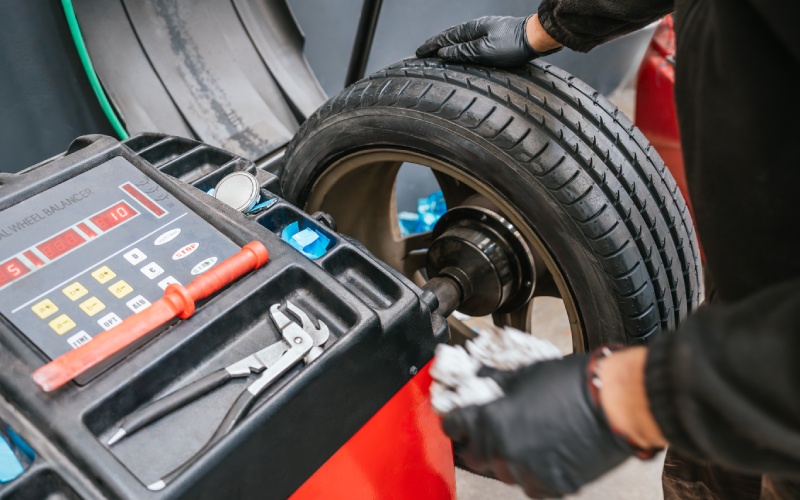
Some services multiply the benefits of a correct alignment. A wheel balance eliminates vibration from small weight differences across a tire and wheel assembly. This makes the steering feel refined and protects suspension bushings and bearings. A thorough suspension inspection catches worn ball joints or bushings that can throw alignment off again. And regular brake inspections confirm that calipers slide freely and do not create uneven drag—a hidden cause of one-sided wear.
Consider building a maintenance rhythm that groups services together: alignment and balance when you install new tires, rotations with every oil change, and a full suspension and brake inspection at least annually. This keeps everything trending in the right direction, avoids last-minute surprises, and helps you budget time for service without disrupting work or family plans.
Looking ahead, tire choices matter too. Touring tires tend to wear more evenly and ride quietly for commuters, while all-terrain or aggressive patterns will need even more vigilance with rotations to prevent heel-toe wear. Your owner’s manual and the placard give you size and load index guidance; a tire specialist can match a tread and speed rating to your driving priorities—comfort, longevity, or maximum traction.
Frequently Asked Questions:
How do I know if I need an alignment?
Watch for off-center steering, drifting on straight roads, or uneven/rapid tire wear. After pothole hits or curb taps, an alignment check is smart even if symptoms are subtle.
How often should I rotate tires?
Every 5,000 to 7,500 miles aligns well with most oil change schedules. Rotate sooner for high city driving or if you see early edge wear.
Do AWD Kias need special rotation patterns?
Many AWD models follow a rearward cross pattern, but always verify the correct pattern for your tire type and vehicle. Even wear is especially important for AWD.
Can alignment fix a vibration?
Not always. Vibration often points to balance or a tire-related issue. We recommend a combined inspection—balance, alignment check, and suspension review.
Should I align with new tires?
Yes. Starting new tires with correct angles protects your investment and promotes quiet, even wear from day one.
Will low tire pressure cause pulling?
Yes. A single underinflated tire can cause a pull. Always correct pressures before evaluating alignment.
For alignment, rotations, or a second opinion on tire wear patterns, schedule service with a team that aligns recommendations to your commute and weekend plans. At Russ Darrow Kia of Madison, we use modern alignment systems, rotate and balance to spec, and inspect related components so you leave with a car that tracks straight and rides calmly. Book online or give us a call—we are close to Sun Prairie and ready to help your Kia feel right again.


0 comment(s) so far on 4-Wheel Alignment and Tire Rotation Guide for Kia Drivers in Sun Prairie, WI